






What are the technical measures for reducing line losses in smart grids?
Release time:
2022-09-02

The losses of the power grid are divided into management line losses and technical line losses. Reduce line loss through management and organizational measures; Technical line losses are reduced through various technical measures. The technical measures to reduce power grid losses include measures that require an increase in investment for technological transformation of the power grid, and measures that do not require an increase in investment but only improve the operation mode of the power grid. This article only discusses the main technical measures to reduce network loss.
Due to various reasons, the transformation capacity of the power grid is insufficient, resulting in bottlenecks and excessively long power supply radii. These issues not only affect the safety and quality of power supply, but also affect line loss. (1) Adjusting the unreasonable network structure, installing new transmission and distribution lines, renovating existing lines, increasing wire cross-sections, and using low loss transformers. (2) Boosting the power grid, simplifying voltage levels and transformer levels, and reducing repetitive substation capacity.
Economic operation of power grid and equipment
The economic operation of the power system and power grid mainly involves determining the combination of units and economically distributing loads. At this point, the economy of the entire system is considered, and line loss is not a decisive factor. Therefore, under the premise of economic distribution of active load in the system, achieving the economic operation of the power grid and its equipment is an effective measure to reduce line losses.
(1) Reasonable distribution of reactive power: While allocating active power reasonably, it is necessary to achieve a reasonable distribution of reactive power. Arrange to reduce reactive power long-distance transmission according to the principle of proximity. Develop reasonable operating methods for line loss calculation in response to various methods; Compensation equipment should be adjusted and utilized reasonably to improve power factor.
(2) Determining the reasonable operation mode of the ring network: whether it is closed loop operation or open loop operation, and at which point the open loop operation is related to the safety, reliability, and economy of the power grid. Starting from enhancing power supply reliability and improving power supply economy, closed-loop operation should be carried out. However, closed-loop operation can lead to complex relay protection, which in turn affects reliability. The open-loop operation should select the disconnection point based on the network loss calculation results.
(3) The reasonable operating voltage of the power grid: The operating voltage of the power grid has an impact on the no-load losses of components in the power grid. Generally, in a power supply network of 35kV and above, increasing the operating voltage by 1% can reduce losses by about 1.2%. Improving the voltage level of the power grid mainly involves doing a good job in reactive power balance throughout the entire network, including increasing the voltage at the generator port, improving the power factor of users, and adopting reactive power compensation devices. Adjust the tap of the transformer under the premise of reactive power balance. In a 10kV distribution network, due to the fact that no-load losses account for about 50% to 80% of the total losses, especially at night when the load is low, the proportion of no-load losses is larger. Therefore, voltage operation should be appropriately reduced according to the user's requirements for voltage deviation. For low-voltage power grids, their no-load losses are minimal, and it is advisable to increase the operating voltage. It can be seen that in the operation of the power grid, a large number of on load voltage regulating devices can be used to adjust the operating voltage of the power grid reasonably under different load conditions.
(4) Adjusting the load curve and balancing three-phase loads: With a large difference between peak and valley loads, there is a large line loss when the power supply is the same. When the three-phase load of transformers is unbalanced, especially in low-voltage networks, it not only affects the safe operation of transformers but also increases line losses.
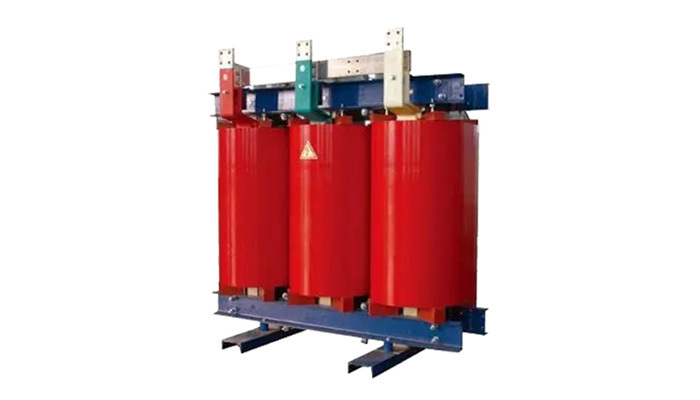
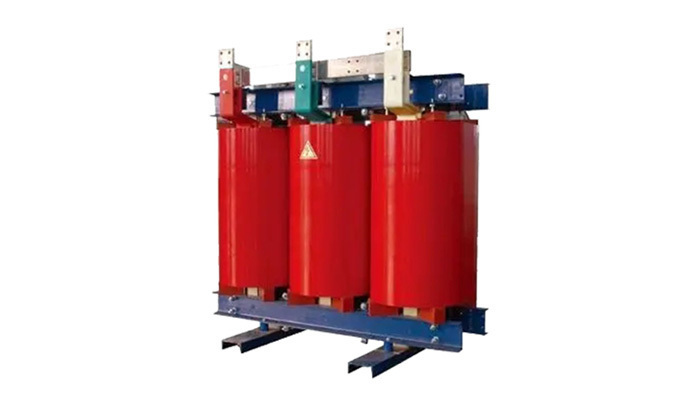
The economic operation of transformers accounts for 30% to 60% of the total system line loss, and reducing transformer losses is an important aspect of power grid loss reduction. Generally, in addition to selecting energy-saving transformers, two or more transformers should be installed in parallel in the substation for operation. This not only increases the possibility of power supply, but also allows for the reasonable shutdown of the number of parallel operating transformers according to the load, reducing transformer losses.
Reactive power compensation in the power grid
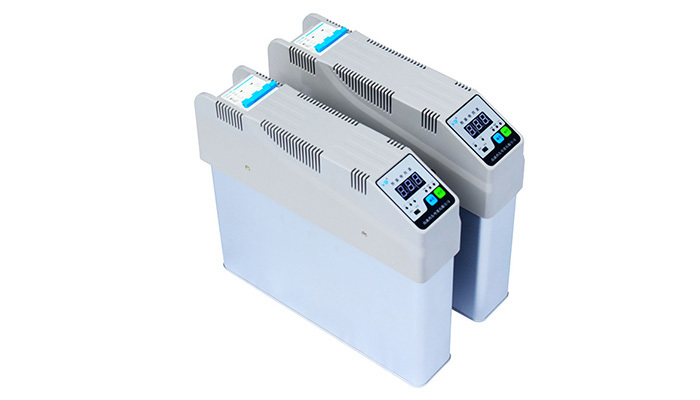
Improving the power factor of the load can reduce the reactive power output by the generator and the reactive power transmitted through the line and transformer, greatly reducing line losses. It can also improve voltage quality and enhance the transmission capacity of the line and transformer.
The installation of reactive power compensation equipment should reasonably select the reactive power compensation capacity and determine the distribution of compensation capacity based on the reactive load and reactive power distribution in the power grid, in order to further reduce power grid losses.
The economic operation of smart grids is an effective way to reduce power supply costs. Reasonably selecting technical measures to reduce network losses is an extremely important task. In addition to understanding various technical measures, power grid management workers also need to choose more appropriate loss reduction measures based on the actual needs of the power grid, in order to achieve twice the result with half the effort.
Latest information
Get a Free Consultancy
If you have any suggestions, please leave a message or send an email to us.

Xidong Electric Appliance
Contact Information
Service Hotline
Telephone: +86 13962924051
Whatsapp: +60 11 69869211
E-mail:ghx@xidongdq.com
Address: Tongyu Avenue, Chengdong Town Industrial Park, Haian County, Jiangsu Province
Copyright © 2025 Nantong Xidong Electric Co., Ltd. Powered by www.300.cn