






Unlocking the Future of Electronics: The Role of Intelligent Liquid Crystal Capacitors
Release time:
2025-04-09

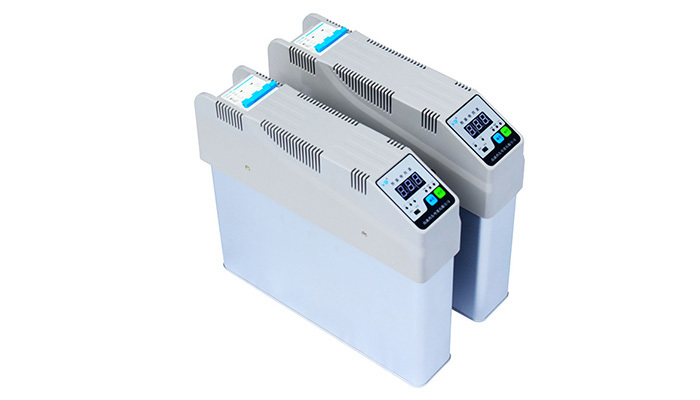
Intelligent Liquid Crystal Capacitors (ILCCs) represent a fascinating evolution in the world of electronic components, particularly in the realm of capacitors. These capacitors are distinguished by their unique combination of liquid crystal technology and conventional capacitive materials, leading to enhanced performance and versatility. As electronics continue to shrink in size while demanding greater efficiency, ILCCs offer a compelling solution to meet these challenges.
One of the primary characteristics of Intelligent Liquid Crystal Capacitors is their ability to adapt to external stimuli. When exposed to electric fields, the liquid crystals within these capacitors can reorient themselves, allowing for the modulation of capacitance. This adaptability makes ILCCs particularly valuable in dynamic applications, such as in communication devices where signal integrity is paramount. The variable capacitance can improve the tuning of circuits, enhancing performance in devices ranging from smartphones to sophisticated communication systems.
Moreover, ILCCs exhibit impressive frequency response characteristics. Unlike traditional capacitors, which may perform better at specific frequency ranges, Intelligent Liquid Crystal Capacitors can maintain stable performance across a broader spectrum. This enables them to be integrated into various applications, including high-frequency circuits and RF (radio frequency) devices. The flexibility of ILCCs allows engineers to design more compact and efficient circuits without sacrificing performance.
Another significant advantage is the potential for energy conservation. As the world leans towards sustainability, the energy efficiency of electronic components has come under scrutiny. Intelligent Liquid Crystal Capacitors can contribute to this goal by minimizing energy loss during operation. Their unique design allows for lower leakage currents compared to traditional capacitors, making them an ideal choice for battery-powered devices and renewable energy systems, where every bit of energy efficiency counts.
The applications for Intelligent Liquid Crystal Capacitors are diverse and continually expanding. They are finding their way into consumer electronics, automotive systems, and even medical devices. In automotive applications, for example, the robust performance of ILCCs under varying environmental conditions makes them suitable for advanced driver-assistance systems (ADAS) that require reliable and responsive components.
In conclusion, Intelligent Liquid Crystal Capacitors are setting a new standard in the world of electronic components. With their ability to adapt to changing conditions, exceptional frequency response, and energy efficiency, ILCCs are proving to be indispensable in the development of next-generation electronic devices. As the technology continues to evolve, we can expect to see even more innovative uses for these remarkable capacitors across various industries, further solidifying their role in the future of electronics.
One of the primary characteristics of Intelligent Liquid Crystal Capacitors is their ability to adapt to external stimuli. When exposed to electric fields, the liquid crystals within these capacitors can reorient themselves, allowing for the modulation of capacitance. This adaptability makes ILCCs particularly valuable in dynamic applications, such as in communication devices where signal integrity is paramount. The variable capacitance can improve the tuning of circuits, enhancing performance in devices ranging from smartphones to sophisticated communication systems.
Moreover, ILCCs exhibit impressive frequency response characteristics. Unlike traditional capacitors, which may perform better at specific frequency ranges, Intelligent Liquid Crystal Capacitors can maintain stable performance across a broader spectrum. This enables them to be integrated into various applications, including high-frequency circuits and RF (radio frequency) devices. The flexibility of ILCCs allows engineers to design more compact and efficient circuits without sacrificing performance.
Another significant advantage is the potential for energy conservation. As the world leans towards sustainability, the energy efficiency of electronic components has come under scrutiny. Intelligent Liquid Crystal Capacitors can contribute to this goal by minimizing energy loss during operation. Their unique design allows for lower leakage currents compared to traditional capacitors, making them an ideal choice for battery-powered devices and renewable energy systems, where every bit of energy efficiency counts.
The applications for Intelligent Liquid Crystal Capacitors are diverse and continually expanding. They are finding their way into consumer electronics, automotive systems, and even medical devices. In automotive applications, for example, the robust performance of ILCCs under varying environmental conditions makes them suitable for advanced driver-assistance systems (ADAS) that require reliable and responsive components.
In conclusion, Intelligent Liquid Crystal Capacitors are setting a new standard in the world of electronic components. With their ability to adapt to changing conditions, exceptional frequency response, and energy efficiency, ILCCs are proving to be indispensable in the development of next-generation electronic devices. As the technology continues to evolve, we can expect to see even more innovative uses for these remarkable capacitors across various industries, further solidifying their role in the future of electronics.
Latest information
Get a Free Consultancy
If you have any suggestions, please leave a message or send an email to us.

Xidong Electric Appliance
Contact Information
Service Hotline
Telephone: +86 13962924051
Whatsapp: +60 11 69869211
E-mail:ghx@xidongdq.com
Address: Tongyu Avenue, Chengdong Town Industrial Park, Haian County, Jiangsu Province
Copyright © 2025 Nantong Xidong Electric Co., Ltd. Powered by www.300.cn
Business License